Showing posts with label Lord Shiva. Show all posts

Tuesday, October 25, 2011

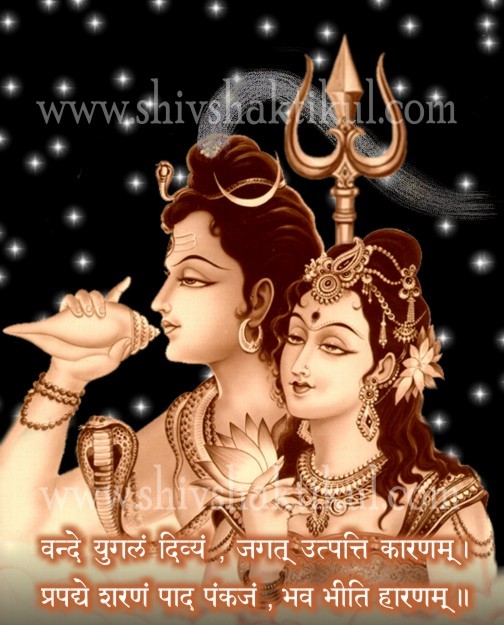
Shiv ji ka Swaroop

संसार में जो कुछ भी एश्वर्य, माधुर्य, सौंदर्य, शक्ति, श्री,शौर्य,सुख, तेज, सम्पति, स्नेह, प्रेम, अनुराग, भक्ति, ज्ञान, विज्ञानं, रस, तत्त्व,गुण, महात्म्य आदि दीखते हैं , सब वहीँ से आता है, जहाँ इनका अटूट भंडार है.  अनादि काल से अब तक इस भंडार में से लगातार इन सारी चीज़ों का वितरण हो रहा है और अनादि काल तक होता रहेगा. परन्तु फिर भी उस भंडार का एक तिल भी कम नहीं होता. वो सदा पूर्ण, अनंत और असीम ही रहेगा. जानते हो वो भंडार कहाँ है और उसका स्वरुप क्या है?

वो भंडार है : भगवान - मेरे शिव शंकर और वो सभी जगह हैं. तुम जो उनका चिंतन छोड़ कर विषय चिन्तन करते हो , एक मात्र उन्हें ही पाने की कामना न रख कर विषयों की कामना करते हो, उन्ही के बल पर सदा निर्भर न रह कर जगत के जड़ बल का आश्रय ग्रहण करना चाहते हो, उनके कृपा कण से ही अपने को परम धनी न मान कर दुनिया की दिखावटी और प्रति क्षण नष्ट होती हुई  धन सम्पदा का मोह करते हो. उनके दासत्व और प्रेम की अनंत कीर्ति का तिरस्कार करके दीवानी दुनिया में नाम कमाना चाहते हो और उनके नित्य सान्निध्य में रहने पर भी अपने को असहाय समझते हो? इस से येही सिद्ध होता है की तुमने अब तक मेरे शिव शंकर के महत्व और प्रभाव की ओर बहुत ही कम ध्यान दिया है. 

मेरे शिव शंकर सच्चिदानंदघन, परम पवित्र और ईश्वरों के भी इश्वर हैं - परम प्रभु हैं, सब में, सब जगह, सर्वदा और सर्वथा व्याप्त हैं. वे तुम्हारे अपने हैं, तुम उनके परम आत्मीय हो, वे नित्य तुम्हारे साथ सोते जागते, उठते बैठते, खाते पीते - सदा ही रहते हैं, एक क्षण के लिए भी तुमसे अलग नहीं होते हैं.

मेरे शिव शंकर को जानो, देखो और पहचानो. तुम्हारे आभाव मिट जायेंगे, तुम्हारे सब दुखों का सदा के लिए नाश हो जायेगा, तुम्हे परम शांति मिल जाएगी. फिर जगत की कोई भी स्तिथि - मृत्यु भी तुम्हे डरा नहीं सकेगी. तुम नित्य बिना दर के और सर्वथा आनंद से परिपूर्ण हो जाओगे

मेरे शिव शंकर को जानने, देखने और पहचानने का सब से पहला साधन है श्रद्धा. जिन अनुभवी महात्माओं और शास्त्रों ने भगवन को जानने, देखने और पहचानने के जो साधन बतलाये हैं, उन पर श्रद्धा करो. ज्यूँ ज्यूँ तुम्हारी श्रद्धा बढ़ेगी , त्यूं ही त्यूं तुम्हे भगवान का प्रकाश समीप आता हुआ दिखाई देगा. तुम अपने अन्दर एक प्रकार के आनंद और शांति का अनुभव करोगे. जैसे जैसे  भगवान के प्यार में तुम्हारा  मन अधिकाधिक लगता जायेगा और ज्यूँ ज्यूँ प्यार बढेगा त्यूं त्यूं तुम भगवान को कुछ कुछ जानने, देखने और पहचानने लगोगे.

मन तभी तक भगवान में नहीं लगता जब तक की उसे आनंद नहीं आता. जिस दिन थोडा भी आनंद आ जायेगा उस दिन से तो फिर ये वहां से हटाये भी हटना नहीं चाहेगा. क्यूँ भगवद प्यार के आनंद का एक कण की भी जगत के बड़े से बड़े आनंद की तुलना नहीं हो सकती. वह आनंद अत्यंत विलक्षण होता है. मेरे शिव शंकर के प्यार में खोते जाओ और अपने जीवन को आनंद और प्रीति से परिपूर्ण कर लो.


Sansar mein jo kuch bhi aishwarya, madhurya, saudarya, shakti, shree, shaurya, sukh, tej, sampati, sneh, prem, anurag, bhakti, gyan, vigyan, ras, tatva, gun, mahatmay adi dikhte hain, sab wahin se aata hai, jahan inka atoot bhandar hai. Anadikaal se ab tak is bhandar mein se lagataar in saari vastuon ka vitaran ho raha hai and anadi kaal tak hota rahega, parantu phir bhi us bhandaar ka ek til bhi sthan khali nahin hota. Wah sada purna, anant aur asim hi rahega. Jaante ho woh bhandar kahan hai aur uska swaroop kya hai?


wah bhandar hain : bhagwan - mere Shiv Shankar aur we sabhi jagah hain. tum jo unka chintan chhod kar vishay chintan karte ho, ek matra unhe he paane ki kaamna na rakh kar vishayon ki kaamna karte ho, unhi ke bal par sada nirbhar na reh kar jagat ke jad bal ka ashray grahan karna chahte ho, unke kripa kan se hi apne ko param dhani a maan kar duniya ki dikhawati aur prati kshan nashta hoti hui dhan sampada ka moh karte ho. unke dasatva aur prem ki anant kirti ka tiraskar karke diwani duniya mein naam kamana chahte ho aur unke nitya-sannidhya mein rehne par bhi apne ko asahay samajhte ho? Is se yehi siddha hota hai ki tumne ab tak mere shiv shankar ke matva aur prabhav ki ore bahut hi kam dhyan diya hai.


Mere Shiv Shankar sacchidanandghan, param pavitra aur ishwaron ke bhi ishwar hain - param prabhu hain; sab mein, sab jagah, sarvada aur sarvatha vyapt hain, ve tumhare apne hain, tum unke param atmiya ho, ve nitya tumahre saath sote-jaagte, uthte baithte, khate peete- sada ho rehte hain, ek kshan ke liye bhi tumse alag nahin hote hain.


Mere Shiv Shankar ko jaano, dekho aur pehchano. tumhare abhav mit jayenge, tumhare sab dukho ka sada ke liye naash ho jayega. tumhe param shanti mil jayegi. phir jagat ki koi bhi sthiti - mrityu bhi tumhe dara nahin sakegi. tum nitya bina dar ke aur aur sarvatha anand se paripoorna ho jaoge.


Mere Shiv Shankar ko jan ne, dekhne aur pehchan ne ka sab se pehla sadhan hjai shhraddha. Jin anubhavi mahatmaon and shashtron ne bhagwan ko janne, dekhne aur pehchanne ke jo sadhan batlaye hain, un par shhraddha karo. jyun jyun tumhari shhraddha badhegi, tyun hi tyun tumhe bhagwan ka prakash samip aata hua dikhai dega. tum apne andar ek prakar ke anand aur shanti ka anubhav karoge, jis se bhagwan ke pyar mein tumhara man adhika dhik lagta jayega aur jo jo pyar bhadega tyun tyun tum bhagwan ko kuch kuch janne, dekhne aur pehchanne lagoge.


Man tabhi tak bhagwan mein nahin lagta jab tak ki use anand nahin aata. jis din thoda bhi anand aa jayega, us din se to phir ye wahan se hataye bhi hatna nahin chahega; kyun bhagwad pyar ke anand ka ek kan ki bhi jagat ke bade se bade anand ki tulna nahin ho sakti. wah anand atyant vilakshan hota hai. Mere Shiv Shankar ke pyar mein khote jao aur apne jeevan ko anand aur priti se paripurna karlo.

Tuesday, July 19, 2011


||र्शिवताण्डवस्तोत्रम् |
||श्रीगणेशाय नमः ||

जटाटवीगलज्जल प्रवाह पावितस्थले
matted hair-thick as forest-water-flow-consecrated-area
गलेऽवलम्ब्य लम्बितां भुजङ्गतुङ्गमालिकाम् |
in the throat-stuck-hanging-snake-lofty-garland
डमड्डमड्डमड्डमन्निनादवड्डमर्वयं
damat-damat-damat-damat-having sound-drum-this
चकार चण्डताण्डवं तनोतु नः शिवः शिवम् ||१||
did-fierce-Tandava-may he shower-on us-Shiva-auspiciousness

With his neck, consecrated by the flow of water flowing from the thick forest-like locks of hair, and on the neck, where the lofty snake is hanging garland, and the Damaru drum making the sound of Damat Damat Damat Damat, Lord Shiva did the auspicious dance of Tandava and may He shower prosperity on us all.

जटाकटाहसंभ्रमभ्रमन्निलिम्पनिर्झरी-
matted hair-a well-agitation-moving-celestial river
विलोलवीचिवल्लरीविराजमानमूर्धनि |
agitating-waves-rows-glorified-head
धगद्धगद्धगज्ज्वलल्ललाटपट्टपावके
Dhagat dhagat dhagat-flaming-forehead-flat area-fire
किशोरचन्द्रशेखरे रतिः प्रतिक्षणं मम ||२||
baby-moon-crest jewel-love-every moment-for me

I have a very deep interest in Lord Shiva, whose head is glorified by the rows of moving waves of the celestial river Ganga, agitating in the deep well of his hair-locks, and who has the brilliant fire flaming on the surface of his forehead, and who has the crescent moon as a jewel on his head.

धराधरेन्द्रनंदिनीविलासबन्धुबन्धुर
King of mountains-daughter-sportive-kith-beautiful-
स्फुरद्दिगन्तसन्ततिप्रमोदमानमानसे |
glorious-horizon-all living beings-rejoicing-mind
कृपाकटाक्षधोरणीनिरुद्धदुर्धरापदि
compassion-look-continuous flow-obstructed-hardships
क्वचिद्दिगम्बरे मनो विनोदमेतु वस्तुनि ||३||
some time-in the omnipresent-mind-pleasure-may seek-in a thing

May my mind seek happiness in the Lord Shiva, in whose mind all the living beings of the glorious universe exist, who is the sportive companion of Parvati (daughter of the mountain king), who controls invincible hardships with the flow of his compassionate look, who is all-persuasive (the directions are his clothes).


लताभुजङ्गपिङ्गलस्फुरत्फणामणिप्रभा
creeping-snake-reddish brown-shining-hood-gem-luster-
कदम्बकुङ्कुमद्रवप्रलिप्तदिग्वधूमुखे |
variegated-red dye-melting-applied-directions-beloved-face
मदान्धसिन्धुरस्फुरत्त्वगुत्तरीयमेदुरे
intoxicated-elephant-glittering-skin-upper garment-covered
मनो विनोदमद्भुतं बिभर्तु भूतभर्तरि ||४||
mind-pleasure-wonderful-may it seek-in him who supports all life

May I seek wonderful pleasure in Lord Shiva, who is supporter of all life, who with his creeping snake with reddish brown hood and with the luster of his gem on it spreading out variegated colors on the beautiful faces of the maidens of directions, who is covered with a glittering upper garment made of the skin of a huge intoxicated elephant.

सहस्रलोचनप्रभृत्यशेषलेखशेखर
Indra/Vishnu-and others-all-lined up-heads-
प्रसूनधूलिधोरणी विधूसराङ्घ्रिपीठभूः |
flower-dust-force-grayed-feet-seat
भुजङ्गराजमालया निबद्धजाटजूटक
snake-red-garland (with) tied-locked hair
श्रियै चिराय जायतां चकोरबन्धुशेखरः ||५||
for the prosperity-for a long time-may he be-Cakora bird-relative-on head

May Lord Shiva give us prosperity, who has the moon (relative of the Chakora bird) as his head-jewel, whose hair is tied by the red snake-garland, whose foot-stool is grayed by the flow of dust from the flowers from the rows of heads of all the Gods, Indra/Vishnu and others.


ललाटचत्वरज्वलद्धनञ्जयस्फुलिङ्गभा-
forehead-flat area-flaming-fire-sparks-luster
- निपीतपञ्चसायकं नमन्निलिम्पनायकम् |
devoured-God of Love-bowing-Gods-leader
सुधामयूखलेखया विराजमानशेखरं
cool-rayed-crescent-beautiful-head
महाकपालिसम्पदेशिरोजटालमस्तु नः ||६||
for the Siddhi-prosperity-head-locked hair-may it be-to us

May we get the wealth of Siddhis from Shiva's locks of hair, which devoured the God of Love with the sparks of the fire flaming in His forehead, who is bowed by all the celestial leaders, who is beautiful with a crescent moon.


करालभालपट्टिकाधगद्धगद्धगज्ज्वल-
dreadful-forehead-flat area-dhagat-dhagat-flaming
द्धनञ्जयाहुतीकृतप्रचण्डपञ्चसायके |
fire-offered-powerful-God of Love
धराधरेन्द्रनन्दिनीकुचाग्रचित्रपत्रक-
king of mountains-daughter-breast-tip-colorful-decorative lines
- प्रकल्पनैकशिल्पिनि त्रिलोचने रतिर्मम |||७||
drawing-sole-artist - in the three-eyed -deep interest-mine

My interest is in Lord Shiva, who has three eyes, who has offered the powerful God of Love into the fire, flaming Dhagad Dhagad on the flat surface of his forehead who is the sole expert artist of drawing decorative lines on the tips of breasts of Parvati, the daughter of the mountain king.

नवीनमेघमण्डली निरुद्धदुर्धरस्फुरत्-
new-cloud-circle - obstructed-harsh-striking-
कुहूनिशीथिनीतमः प्रबन्धबद्धकन्धरः |
new moon-midnight-darkness-tightly-tied-neck
निलिम्पनिर्झरीधरस्तनोतु कृत्तिसिन्धुरः
celestial-river-wearing-may he bless-skin-red
कलानिधानबन्धुरः श्रियं जगद्धुरंधरः ||८||
moon-lovely-prosperity-universe-bearer of the burden

May Lord Shiva give us prosperity, who bears the burden of this universe, who is lovely with the moon, who is red wearing the skin, who has the celestial river Ganga, whose neck is dark as midnight of new moon night covered by many layers of clouds.

प्रफुल्लनीलपङ्कजप्रपञ्चकालिमप्रभा-
well-opened-blue-lotus-universe-darkness-luster
- वलम्बिकण्ठकन्दलीरुचिप्रबद्धकन्धरम् |
hanging-inside-temple-luster-tied-neck
स्मरच्छिदं पुरच्छिदं भवच्छिदं मखच्छिदं
Manmatha-killer-city-destroyer-mundane life -destroyer-sacrifice destroyer
गजच्छिदांधकच्छिदं तमंतकच्छिदं भजे ||९||
elephant-killer-demon-killer-him-destroyer of Lord Yama-I worship

I pray to Lord Shiva, whose neck is tied with the luster of the temples hanging on the neck with the glory of the fully-bloomed blue lotuses which looked like the blackness (sins) of the universe, who is the killer of Manmatha, who destroyed Tripuras, who destroyed the bonds of worldly life, who destroyed the sacrifice, who destroyed the demon Andhaka, the destroyer of the elephants, and who controlled the God of death, Yama.


अखर्व( अगर्व) सर्वमङ्गलाकलाकदंबमञ्जरी
great-all-auspicious-art-variegated-bunch-
रसप्रवाहमाधुरी विजृंभणामधुव्रतम् |
enjoyment-flow-sweetness-flaring up-bees
स्मरान्तकं पुरान्तकं भवान्तकं मखान्तकं
Manmatha-destroyer-city-destroyer-worldly bond-destroyer -sacrifice-destroyer
गजान्तकान्धकान्तकं तमन्तकान्तकं भजे ||१०||
elephant-killer-Andhaka-demon-killer-him-Yama-controller-I worship

I pray to Lord Shiva, who has bees flying all over because of the sweet honey from the beautiful bunch of auspicious Kadamba flowers, who is the killer of Manmatha, who destroyed Tripuras, who destroyed the bonds of worldly life, who destroyed the sacrifice, who destroyed the demon Andhaka, the killer of the elephants, and who controlled the God of death, Yama.

जयत्वदभ्रविभ्रमभ्रमद्भुजङ्गमश्वस-
victorious-foot-sky-whirling-roaming-snake-breath-
- द्विनिर्गमत्क्रमस्फुरत्करालभालहव्यवाट् |
coming out-shaking-evident-dreadful-forehead-fire
धिमिद्धिमिद्धिमिध्वनन्मृदङ्गतुङ्गमङ्गल
Dhimid-dhimid-dhimid-sounding-drum-high-auspicious-
ध्वनिक्रमप्रवर्तित प्रचण्डताण्डवः शिवः ||११||
sound-series-caused-fierce-Tandava dance-Shiva

Lord Shiva, whose dance of Tandava is in tune with the series of loud sounds of drum making Dhimid Dhimid sounds, who has the fire on the great forehead, the fire that is spreading out because of the breath of the snake wandering in whirling motion in the glorious sky.

स्पृषद्विचित्रतल्पयोर्भुजङ्गमौक्तिकस्रजोर्-
touching-varied-ways-snake-embodied-garland
- गरिष्ठरत्नलोष्ठयोः सुहृद्विपक्षपक्षयोः |
most precious-gems-brilliance-friends-enemies-two wings
तृष्णारविन्दचक्षुषोः प्रजामहीमहेन्द्रयोः
grass-lotus-eyes people and the great emperor
समप्रवृत्तिकः ( समं प्रवर्तयन्मनः) कदा सदाशिवं भजे ||१२||
equal-behaviour-always-Lord Shiva-worship-I

When will I worship Lord Sadasiva (eternally auspicious) God, with equal vision towards the people and an emperor, and a blade of grass and lotus-like eye, towards both friends and enemies, towards the valuable gem and some lump of dirt, towards a snake and a garland and towards varied ways of the world


कदा निलिम्पनिर्झरीनिकुञ्जकोटरे वसन्
when-celestial river-bush-hollow place(in)-living
विमुक्तदुर्मतिः सदा शिरः स्थमञ्जलिं वहन् |
released-bad mind-always-on the head-folded hands-
विमुक्तलोललोचनो ललामभाललग्नकः
agitation-shaking-eyes-the best-forehead-interested
शिवेति मंत्रमुच्चरन् कदा सुखी भवाम्यहम् ||१३||
"Shiva" -mantra-uttering-when-happy-will-be-I

When will I be happy, living in the hollow place near the celestial river, Ganga, carrying the folded hands on my head all the time, with my bad thinking washed away, and uttering the mantra of Lord Shiva and devoted in the God with glorious forehead with vibrating eyes.

इदम् हि नित्यमेवमुक्तमुत्तमोत्तमं स्तवं
This-indeed-daily-thus-said-the best of the best-stotra
पठन्स्मरन्ब्रुवन्नरो विशुद्धिमेतिसंततम् |
reading-remembering-saying-a person-sanctity-gets-always
हरे गुरौ सुभक्तिमाशु याति नान्यथा गतिं
in Shiva-in Guru-deep devotion-quickly-gets-no-other-way
विमोहनं हि देहिनां सुशङ्करस्य चिंतनम् ||१४||
removal of delusion-indeed-for the people-blessed Shiva's thought

Whoever reads, remembers and says this best stotra as it is said here, gets purified for ever, and obtains devotion in the great Guru Shiva. For this devotion, there is no other way. Just the mere thought of Lord Shiva indeed removes the delusion.

पूजावसानसमये दशवक्त्रगीतं
worship-end-time-Ravana-sung
यः शंभुपूजनपरं पठति प्रदोषे |
who-Shiva-worship-dedicated-reads-early in the evening, after sunset
तस्य स्थिरां रथगजेन्द्रतुरङ्गयुक्तां
to him-stable-chariot-elephant-horse-having
लक्ष्मीं सदैव सुमुखिं प्रददाति शंभुः ||१५||
Lakshmi-always-definitely-favourable-gives-Shiva

In the evening, after sunset, at the end of Puja, whoever utters this stotra dedicated to the worship of Shiva, Lord Shiva blesses him with very stable Lakshmi (prosperity) with all the richness of chariots, elephants and horses.


इति श्रीरावण- कृतम्
thus sri-Ravana-done
शिव- ताण्डव- स्तोत्रम्
Shiva-tandava-stotra
सम्पूर्णम्
ends.
Thus ends the Shiva-Tandava Stotra written by Ravana

Monday, June 13, 2011

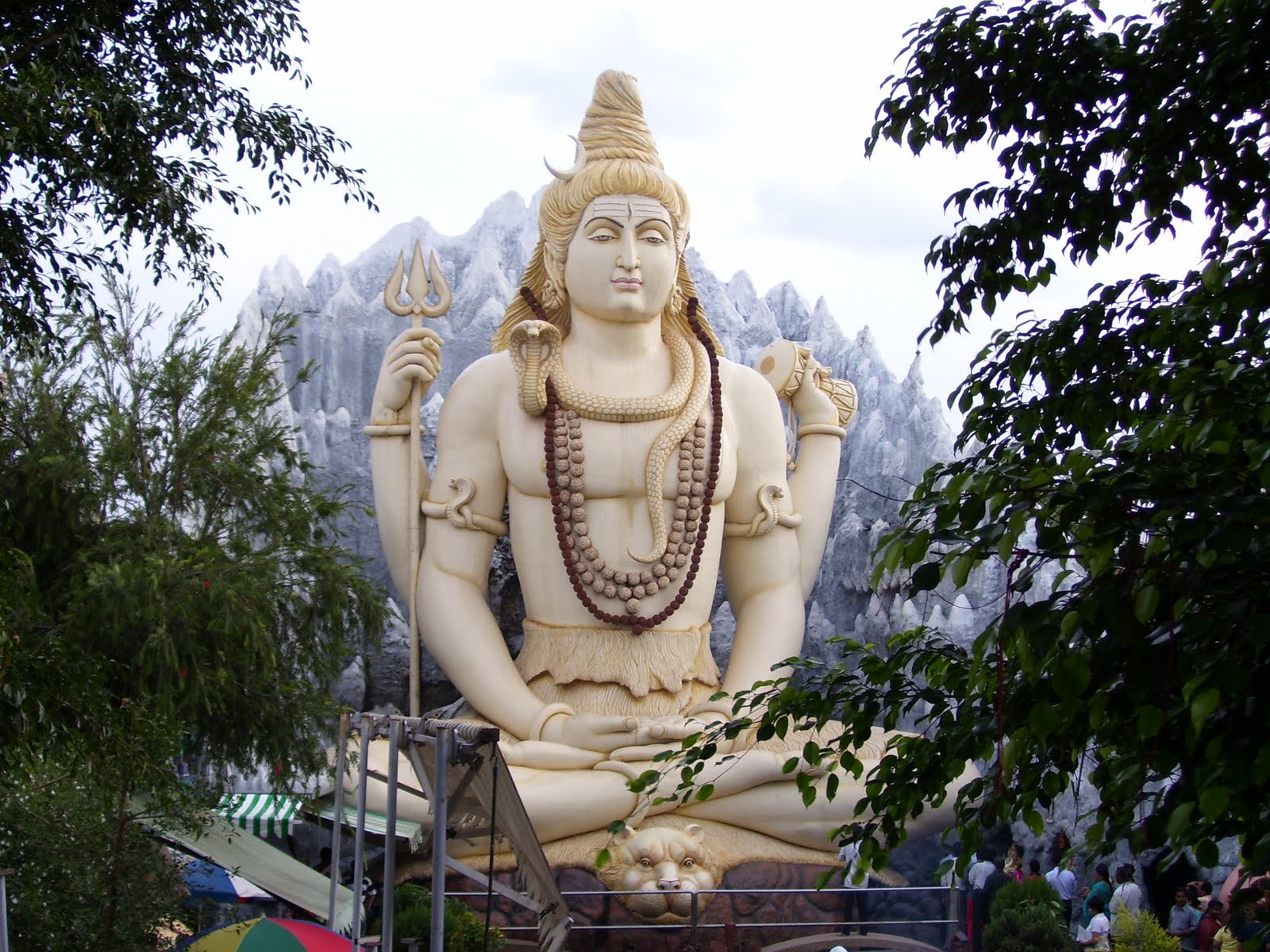
LORD SHIVA

The terms Siva or Sankara mean Auspicious. Sam means Chitaananda (Blissful Awareness). Kara means the one who causes it. Sankara means the One who causes blissful awareness. Sankara is the One who confers Chitaananda on those who take refuge in Him or adore Him.
The secret of Creation is evident from the description of the form of Siva. The crescent moon on Sivas head symbolizes the consciousness in human beings, the Ganga symbolizes the Life Force and the snakes on Sivas body represent the myriad of living beings. He resides on a silver mountain. His dearest friend is Kubera, the Lord of Wealth. Despite being endowed with all these, why was He obliged to carry the begging bowl? To demonstrate to the world that every kind of wealth is a hindrance to spiritual advancement, Siva renounced everything. It is through renunciation Siva became the eternal embodiment of supreme bliss.

Iswara is also symbolized in the Linga Form, Lings is derived from the Sanskrit root, Li, means Leeyathe, 'merges'; it is the form in which all forms merge. Siva is the goal who blesses beings with the most desirable gift of meaning in the universe. That is the end, the death, which one should strive for, the end which Siva can vouch-safe.

Siva means, graciousness; auspiciousness; Mangalam. He is all graciousness, ever auspicious, Sarva Mangalam. That is the reason why the epithet, Sri, which indicates these qualities, is not added to the name Siva, Sankara, lsvara etc. It is added to the number of Avatars, for they have taken on perishable bodies for a specific purpose. They have to be distinguished from other humans, by the epithet, Siva is eternally gracious, auspicious, mangala and so the epithet is superfluous. Siva is adored as the teacher of teachers, Dakshinamurti. The form of Siva is itself a great lesson in tolerance and forbearance.

The Lord has another name. It is only when the love principle underlying this name is rightly understood, the real form of the Cosmos can be recognized. That name is Saambasiva. Saa means divinity. Amba refers to the cosmos. Siva means the Supreme person (Purusha).
Easwara has yet another name: Yogasikha. The sky is His blue form. The directions (Dik) are His garment. Hence He is known as Digambara. He is also known as Panchaanana - the Five-headed One. The five are: Earth, water, fire and aakaasa (space). His five heads represent the five basic elements (panchabhuthas). Siva is also described as Bhuthanaatha - the Lord of all created beings. Bhutha refers to creation. Easwara is the Lord of every creature in the universe. Hence, the entire cosmos is reflected as an image in the Lord. Siva is known as Subhankara- the one who is ever good (Subham).
The three eyes of Siva represent the three worlds (lokas). Siva's trident is symbolic of the Past, the Present, and the Future, the three aspects of Time. The three gunas (Satwa, Rajas, Thamas) are images of the Trinity - Brahma, Vishnu, and Siva. The three worlds, the triune aspect of Time, the three gunas (qualities) are the manifestations of the Easwara Principle.
It is for the well-being of the world that Siva swallowed the Halahala poison. Again, it is for the sake of the worlds good that Siva contained the Ganga in His matted locks. Siva bears the moon on His head to confer peace of mind on mankind. When man moulds himself on the pattern of Easwara, he will get rid of all his evil tendencies and offer to the world what is good in him. That is the meaning of the worship of Siva. It is only when man gives up utterly his bad thoughts, evil desires and wicked deeds, he will be able to transform himself into divinity.


Go through this brief description about the attributes of Lord Shiva:

Unclad body smeared with ashes: This form of Lord Shiva symbolizes the transcendental aspect of his nature and indicates that his presence is much higher than this physical phenomenon. The ashes on the Lord's body is cemetery ash, which points to the philosophy of the life and death and shows that death is the ultimate reality of the life. Most things in the universe reduce to ashes when burned and this aspect of nature is suggested by the ash-smeared appearance of Lord Shiva, who is held to be the God of destruction in Hindu mythology. The Lord is beyond the cycle of birth and death.

Jata (Matted Hair): The flow of his matted hair represents Shiva as the Lord of Wind or Vayu, who is the subtle form of breath present in all living beings. It shows that Shiva is Pashupatinath, Lord Of All Living Beings.

Sacred Ganga: The river Ganga (or Ganges) is the most sacred river for pious Hindus. According to a legend, the river Ganga has its source in Shiva and flows from his matted hair. This is symbolically represented by depicting Ganga as a jet of water sprinkling out of the head of the Lord and falling on the ground. Legend has it that the Lord allowed an outlet to the great river to traverse the earth and bring purifying water to human being. Hence, Lord Shiva is often referred to as Gangadhara or "Bearer of the river Ganga". The river Ganga also denotes fertility, one of the creative aspects of the Rudra. It also indicates that Shiva is not only the Lord of destruction but also the bestower of knowledge, purity and peace on the devotees.

The Third Eye: In the great Hindu epic Mahabharata, Lord Shiva is depicted as a three-eyed God. Hence, he is often referred to as Tryambaka Deva, meaning "three-eyed Lord". The sun is said to be his right eye, the moon the left eye while fire is his third eye. While his other two eyes indicate his activity in the physical world, his third eye in the center of his forehead looks beyond the obvious. It stands for spiritual knowledge and power, and is thus called the eye of wisdom or knowledge. Like fire, the powerful gaze of Shiva's third eye can search evil from anywhere and annihilate it completely. This is the reason why evil-doers fear his third eye.

Half-Open Eyes: The half-open eyes of Lord Shiva convey the idea that the cycle of universe is in process. When the Lord opens His eyes a new cycle of creation begins and when He closes them it signifies the destruction of the universe for creation of the next cycle. The half-open eyes signify that creation is going through an eternal cyclic process, with no beginning and no end.

Crescent: Lord Shiva is typically pictured as wearing a crescent-shaped ornament on one side of his head. This is why he is often called 'Chandrasekhara' meaning "Having the moon as his crest". The Crescent is actually the moon in its fifth day phase and symbolizes the time cycle through which creation evolves from the beginning to the end. The moon is a measure of time, and thus the Crescent on Lord Shiva's head signifies his control over time. The Lord is the Eternal Reality and He is beyond time. Thus, the crescent moon is only one of His ornaments, and not an integral part of Him.

The Snake around the neck: Lord Shiva is often shown with a snake curled three times around His neck and looking towards His right side. The three coils of the snake symbolize the past, present and future - time in cycles. The snake looking in the right direction of Lord Shiva signifies that the Lord's perpetual laws of reason and justice preserve natural order in the universe. The snake is believed to be the Vasuki Naga, a deadly cobra. The Lord wearing the deadly snake like an ornament signifies that He is independent of time and death. It also suggests the dormant energy, called Kundalini Shakti, that resides within him.

Vibhuti: The three line of ashes drawn on the forehead of the Lord is known as the Vibhuti. It signifies the Immortality of the Lord and his manifested glory.

Tiger Skin: Hindu mythology states that the tiger is the vehicle of Shakti, the Goddess of power and force. Lord Shiva is often shown seated upon or wearing a tiger skin, which emphasizes the fact that he is the master of Shakti and is beyond and above any kind of force. Tiger is also the emblem of lust. The Lord's sitting on Tiger skin indicates that he has conquered lust. Tiger also represents energy. Lord Shiva is the source of the creative energy that remains in potential form during the dissolution state of the universe. He activates this energy using his own Divine Will to project the universe in endless cycles.

The Elephant and Deer Skin: The Lord also wears elephant and deer skins. Elephants stand in for pride while deer represent the flickering mind. Wearing elephant and deer skin shows that Lord Shiva has conquered both these vices.

Rudraksha Necklace: He is almost always shown as wearing a necklace having 108 beads made with seeds of the Rudraksha tree. The beads represent the elements used in the creation of the world. The Rudraksha necklace points to the 'Rudra' aspect of the Lord, which is also His other name. The word 'Rudra' means "strict or uncompromising" and aksha means "eye." It illustrates the fact that Lord Shiva is firm about His cosmic laws and strictly maintains law and order in the universe.

Damaru (Drum): It is the small hourglass-shaped drum that the Lord holds in one of his hands in a specific gesture called 'damaru-hasta'. The two sides of the drum separated from each other by a thin neck-like structure represents the two utterly different states of existence, unmanifest and manifest. When a damaru is shaken, it produces Nada, the cosmic sound of AUM, which can be heard during deep meditation. According to Hindu scriptures, Nada is the source of creation. This is one of the attributes of Shiva in his famous dancing representation known as Nataraja.

Trishul (Trident): The trident, or the spear with three prongs, is one of the accessories of the Lord and symbolizes His three fundamental powers iccha(will), kriya(action) and jnana(knowledge). It also signifies His power to destroy evil and ignorance. As His weapon and instrument of punishment the trident represents Lord Shiva's manner of punishing the evil doers on all the three planes - spiritual, subtle and physical.

Kamandalu: The water pot (Kamandalu) often shown adjacent to the Lord is another of his accessories. It is said to be made from a dry pumpkin and containing amrit (nectar). Indian Yogis and sages are seen to carry the Kamandalu as an item of basic necessity. The carrying of the Kamandalu shows the yogic nature of the Lord. But it has a deeper significance. As a ripe pumpkin has been plucked from a plant, its fruit removed and shell cleaned for containing the nectar, an individual too must give up his attachment to the physical world and clean his inner self of egoistic desires to experience the bliss of the Self, symbolized by the nectar in the Kamandalu.

Kundalas: The Kundalas refer to the two ear rings, Alakshya (meaning "which cannot be shown by any sign") and Niranjan (meaning "which cannot be seen by mortal eyes"), worn by the Lord. The ornaments in the ears of the Lord signify that He is beyond ordinary perception. It is noteworthy that the kundala in the left ear of the Lord is of the type used by women and the one in His right ear is of the type used by men. The dual type of Kundalas represent the Shiva and Shakti (male and female) principle of creation.

Mount Kailasa: Lord Shiva is most often shown to be seated with the beautiful Himalayas serving as his backdrop. Mount Kailash in the Himalayas is said to be His traditional abode. In Hindu mythology, Mount Kailasa is said to represent the center of the universe. This denotes that Lord Shiva is 'Kailas' - the bestower of peace and also 'Kailashadhipati' meaning "Lord Of Mount Kailash".

Nandi, the Bull: Nandi is the Bull of Lord Shiva and is said to be his vehicle. The bull is a symbol both of power and ignorance which suggests that Lord Shiva removes ignorance of his devotees and gives them the power of wisdom. In Sanskrit a bull is called "Vrisha" which also means "righteousness". The Nandi bull beside Lord Shiva indicates that He is the eternal companion of righteousness.


Shiva - The Meaning


shiva the name of the Lord is a mantra. It is a part of the very holy mantra of shaivam The Holy Five Letters. mantra means powerful word. The mantras are revealed to and through the sages in their matured spiritual state to the entire world. These mantras may or may not be associated directly to one particular language. At times they get interpreted in the languages. The name shiva and The Holy Five Letters are accepted as they are in different languages.
In saMskR^itam the word shiva means auspicious, prosperous (maN^gaLam). The Lord who is called pashupati, Asutosha being the Supreme that can not be measured by the thoughts, appears to the one who worships as the God graceful, blissful and nurturing. Its auspicious and graceful forms and names are invoked by the worshiper for the upliftment of oneself.
In thamiz it refers to shiva - civappu - chemporuL meaning the Perfect Being. The God staying in a state blissful, enjoying in Its Own Self eternally, without any flaws is the Supreme Lord shiva. The Perfection is the completeness - there is nothing external that is required to make the Self blissful. In this context it would be worthwhile to contemplate on the mantra shivatarAya.